
Marshal the troops
The Terrace Detective

Victoria Barracks in 1989. Picture: City of Sydney Archives
For those unfamiliar with the Terrace Detective’s oeuvre, the vast majority of our articles are focused on discovering old names of terrace houses in this lovely heritage suburb. We hew very closely to our byline. But there are the odd occasions when we take a heritage detour.
Sometimes it’s unsympathetic development applications (looking at you, proposals to turn the Village Inn into a dress shop, or the desecration of the RHW chimney), and who could forget the heritage drain covers of Paddington, still one of my favourite columns to research.
This episode is another detour. You’ve probably heard of it: the Department of Defence is considering selling Victoria Barracks. As you could imagine, I am being stopped on the street by all and sundry imploring me to devote a column to this important topic — and I never wish to disappoint my readers.
We will still call on the local historian’s toolkit — the trusty Sands Postal Directory (available online via the City of Sydney archives), as well as the National Library of Australia’s Trove website. But we will probably lean on Trove a little more than the Sands.
The history of Paddington and the barracks is intertwined. Paddington as a place predates the barracks, but only by a couple of years. Land grants in the area occurred in the early 1800s.
One of the bigger grants of 100 acres was to Messrs Cooper, Underwood and Forbes to build the Sydney Distillery at what is now the bottom of Glenmore Rd (the distillery fed by the springs cascading down the valley — yes, Cascade St is a legacy of this).
The syndicate disbanded in the 1830s and James Underwood subdivided his 50 acres into the Paddington Estate in 1839. We might come back to this in a future column.
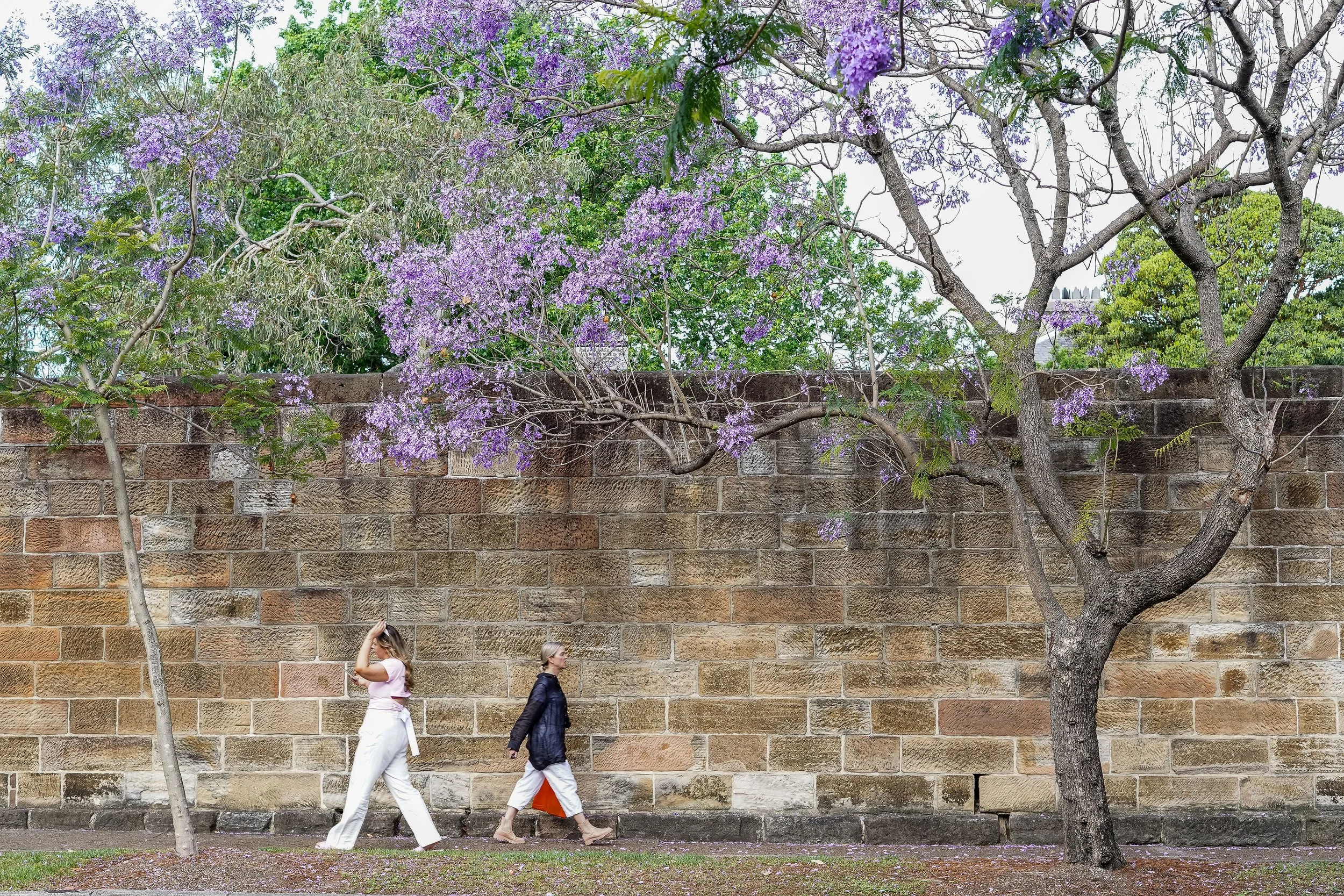
The historic sandstone wall. Picture: Jessica Nash
Around the same time, governor Richard Bourke decided the military needed to move out of the city. The old barracks was based near Wynyard in what is now Barrack St (ahem). The site on South Head Rd was considered well removed from the city. Most of the site was included in the Sydney Common, which meant it was crown land and available.
First up is always the site inspection, but I’ve already done it. I was fortunate to visit the barracks as a guest when one of my kids had a playdate there with a military family living in the married quarters (the building closest to the Town Hall).
The site is open to the public on Thursdays as well as the third Sunday of every month. If you were really keen to visit outside these hours, I suppose you could always enlist.
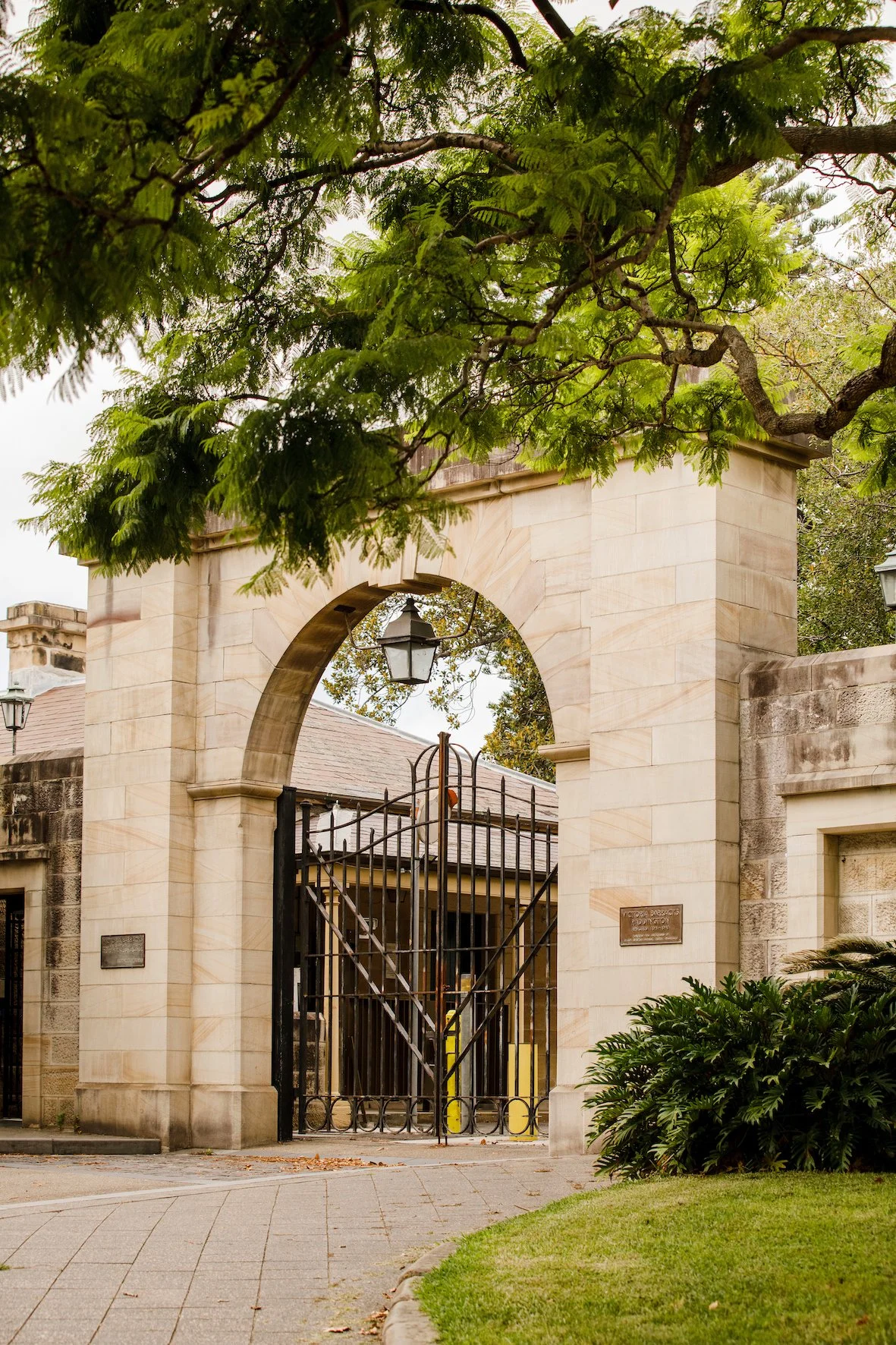
Oxford St entrance. Picture: Trent van der Jagt
My hunch about the Sands is correct. While it is a prominent feature on the main street, the Sands recorders often just listed it as Victoria Barracks. Some years we got the name of the ordnance storekeeper (in 1889, a Julien T. Blanchard), and for others we got most of the officers (in 1891, Colonel Warner Spalding appeared to be the ranking officer).
The more interesting feature on this stretch of Oxford St (then called South Head Rd) was the prevalence of military-themed pubs. The 1879 Sands has the Crossed Guns Hotel (now the Imperial) as well as the Rifle Butts Hotel on the corner of Hopkins Pl. Neither the pub nor Hopkins Pl exist today, as the Rifle Butts later became the Town Hall Hotel and, in 1959, was demolished to make way for the Paddington RSL.
So it is off to Trove. A letter writer to The Sydney Herald on December 5, 1840, was very much gratified to learn that work had commenced on the new barracks and that putting troops a “convenient distance” out of the city and away from temptations would be much better for discipline.
“Every person must be aware what an extent the drunkenness, disorderly conduct, robberies and open violence the military have lately been carried to; therefore their removal has been sorely looked for and will be hailed with joy.”
They would likely be amazed that 186 years later we would be writing letters to keep the troops.
I can’t tell when exactly the name Victoria Barracks was assigned. In the early 1840s, it is referred to as the new military barracks. But by 1844 we have some hits on Trove for Victoria Barracks, and some examples are even more formal.
An advertisement of May 16, 1844, in the Colonial Observer newspaper, selling a block of land in Paddington on Gipps St, which was more or less opposite Prospect Pl (so I’m guessing that is the modern 15 or 17 Gipps St), declared that “the great recommendation of this property is the increasing value of all building ground contiguous to the new Royal Victoria Barracks.
"It is a snug compact allotment, with plenty of depth, and in a good situation, and those who know how to set about it may get plenty of extra labour with little trouble or expense.”
That last line is particularly telling. Prior to the Cardwell reforms in 1868, the British Army was an interesting institution. Officers would buy their commissions, and the rank and file were relatively poorly paid, getting a pension after 21 years and the hope of a land grant in the colonies.
Soldiers were allowed, or at least a blind eye was turned, to do extra work on the side. Paddington was about to be blessed with an abundance of cheap manpower to assist the terrace boom that was unfolding.
The first occupants of the Victoria Barracks were the 11th Regiment of Foot, the Devonshire Regiment, arriving in 1848. After serving with merit in the Napoleonic wars, they were lately on colonial garrison duty, coming to Australia after spending some time in Canada.
The British Army occupied the barracks continuously until 1870, when colonial defence was transferred to a domestic NSW regiment. The Illustrated Sydney News of September 6, 1870, reported that thousands of people “of all classes and conditions” turned up to have a final look at the British soldiers.
The 18th Regiment of Foot, the Royal Irish Regiment, fell into order at the Victoria Barracks at a quarter past 2 o’clock and marched to Circular Quay, accompanied by the band of the Sydney Battalion of the Volunteer Rifles.
One of my favourite bits of military trivia related to Victoria Barracks, that loyal readers may recall, concerns the 12th Regiment of Foot (the East Suffolk Regiment), which, after putting down the Lambing Flat riots near present day Young, (a bigger goldfield rebellion than the Eureka Stockade but the Victorians had a less problematic flag and better marketing), made the longest winter march by any British regiment. This trek tallied more than 400km in only 12 days on the way back to Victoria Barracks.
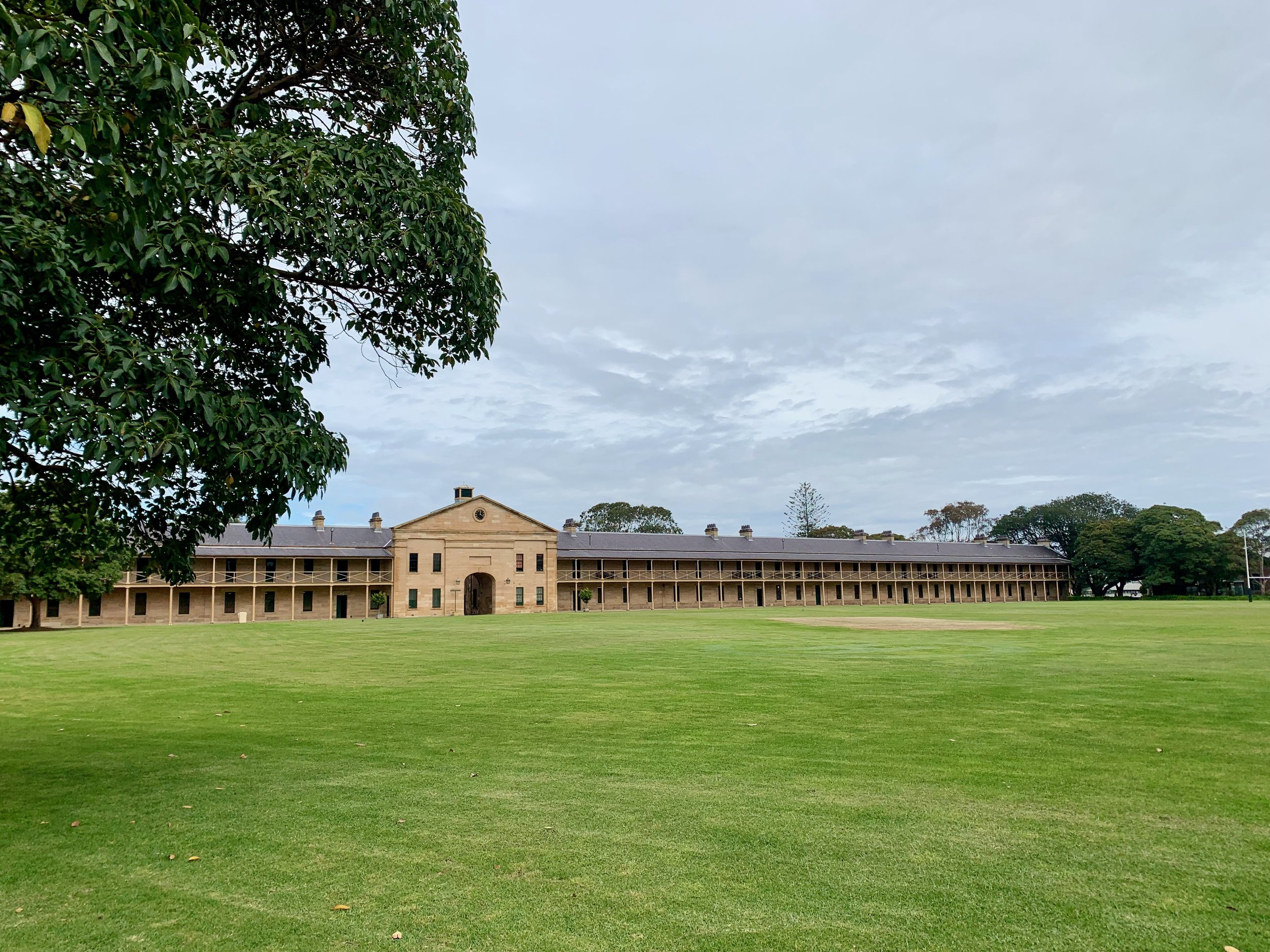
Victoria Barracks today. Picture: Elizabeth Meryment
It is interesting to see the changing tone in Trove as we move into modern times. Originally one of the shining gems of the Victorian-era army, the barracks' place was in question throughout the 20th century.
In the early 1900s, Paddington council began a campaign complaining about the presence of the barracks, as it took up valuable land but didn’t pay rates (interestingly, local councils still complain about the rates exemption for commonwealth and state government lands).
Alderman James Dillon was quoted in the Australian Star of June 16, 1908, stating that “from one end of Oxford St to the other there was howl from ratepayers about the heavy taxes they were called on to pay while the council received not one farthing from the large area occupied by the soldiers who were closed in by an unsightly stone wall.”
After World War I, the major military base moved out to the Holsworthy Barracks and with population growth the first debates about freeing up the base for housing took place. The Sydney Morning Herald reported in May 1922 that Paddington council again led a deputation to the minister of defence to transition the site to a residential area.
But it wasn’t just about houses. Alderman Albert Thwaites complained that “the barracks were used to small degree as administrative offices but to great extent for the entertainment of officers and their satellites. The place was called the ‘harem of Australia’.”
Sadly, I was unable to find any more references to whatever Thwaites was alluding to. It was reported in January 1925 that the federal government had agreed to negotiate with the state on this, but not everyone was happy.
The Lithgow Mercury came to the defence of the troops, stating that “in this commercial age sentiment is not allowed to block the way of material advancement for long”.
During the Great Depression, Duntroon was closed as a cost-saving measure (the population of Canberra was only 9000 at the time) so Victoria Barracks hosted the Royal Military College from 1931 to 1936.
After World War II, Victoria Barracks was again in the news due to a local council, this time the City of Sydney, campaigning to get their hands on the site. Cyril Chambers, the minister for the army, stated in reply that there were army bases in all the capital cities of the various states.
“If the Victoria Barracks were removed from Paddington to Ingleburn, a person who required information about an army matter would have to travel all the way to Ingleburn to obtain it. While I am minister for the army, I cannot recommend Victoria Barracks be transferred to any other area.”
I agree with the late minister. I don’t even know where Ingleburn is.
As you could probably guess, the Terrace Detective is fond of heritage and if my preference counted I would keep the army there. They have been great stewards of the site — it is open space today precisely because of the barracks.
We have the SCG due to the original land grant to British soldiers for a cricket oval. The football stadium is on their old rifle range. Had council been successful in the 1920s or 40s, I fear it would be a few streets of unremarkable flats — the fate of the old Police Citizens Youth Club gym on Heeley St.
While the verdict on the ongoing military use seems to have been decided, there are many ongoing questions around its future use. All residents should take a keen interest in plans and ensure that we keep the vast bulk of the site intact.
This is where I say case closed. But also, please join me if and when the troops march out of the barracks for the final time in the near future. It was a grand spectacle in 1870 and I expect nothing less next time.